Somewhere in Rotterdam or Barcelona, an inspector opens one carton in ten from a Kenyan bean consignment and sends a sample to a laboratory. Nothing about that decision has anything to do with how the crop looked at harvest. It was settled months earlier, in a spray shed, by a choice of product and a date on a record sheet.
Kenyan produce has been getting steadily better at passing that test. It is worth understanding exactly what the test is.
Kenya sits on Annex I of the EU's Regulation (EU) 2019/1793, the list of origin-and-product combinations subject to a temporary increase of official controls at border control posts. Two entries carry our flag: fresh or chilled beans at a 10 percent rate of identity and physical checks, and hot peppers of the genus Capsicum at 20 percent — both flagged for pesticide residues (consolidated text of Regulation 2019/1793).
That percentage is not a tax. It is a probability. Ten percent means roughly one consignment in ten is stopped, sampled and held while the laboratory works — and airfreighted French beans do not wait well. A single detention costs the value of the load, the freight already paid, and the confidence of the partner on the other end. The list is reviewed regularly on the basis of recent non-compliance, so the rate moves with the country's own record.
Maximum Residue Levels are set crop by crop and molecule by molecule. What trips people up is the gap. Where a pesticide has no MRL set for a given crop, the EU applies a general default of 0.01 mg/kg under Regulation (EC) No 396/2005 (European Commission).
Treat 0.01 mg/kg as a technical zero. It is not a limit you manage down to with a shorter interval — it is the level at which a modern laboratory can barely see the molecule at all. If the active you sprayed carries no EU MRL for the crop in the carton, there is no safe window. There is only detection or non-detection.
This is the point that costs farms the most money, and it is a regulatory mismatch rather than a farming mistake. The two systems are separate registers, and they diverge. The 2022 Pesticide Atlas counted 230 active ingredients registered in Kenya, of which 51 were no longer permitted in the EU (Heinrich Böll Stiftung). A product can be legally on the shelf in Nakuru, correctly labelled, correctly applied — and still put a container on a laboratory bench in Europe.
Kenya has been closing that gap from its own side. In June 2025 the Ministry of Agriculture withdrew 77 pesticide products from the market and restricted a further 202 to non-food crops, covering 19 active ingredients in total (Route to Food). If those products are still sitting in a store, they are still a liability.
The pattern shows up in the interception data. Hexaconazole — a systemic fungicide registered for use in Kenya, including on beans, through the Pest Control Products Board register — was the only residue breached more than once in the first four months of 2026, both times on green beans (Farmbiz Africa). One molecule, one crop, repeated.
The honest headline is that this is working. EU interceptions of Kenyan produce for MRL breaches fell from 44 in 2024 to 33 in 2025, and stood at 7 for January to April 2026 against 14 in the same months of 2025. Green beans accounted for 4 of those 7, compared with all 14 the year before (Farmbiz Africa, above). Kenya also went through a DG SANTE audit of its official residue controls in June 2026, covering the legislative framework, laboratory capacity, traceability and enforcement (KEPHIS).
Numbers like that are what eventually move a country down a check-rate column. They are also fragile — a handful of farms can undo a season of collective work.
Worth noting too that residues are not the only hazard on the sheet. One of the food safety notifications in that same 2026 window was Listeria monocytogenes flagged in baby corn, which is a hygiene and cold-chain question, not a spray question.
On our own farms in Loitokitok and the Rift Valley, and in the Rongai [live trials](/live-trials) greenhouse, this is the first filter we apply to any input we consider carrying — crop protection and biostimulants are assessed on where their residues are accepted, not only on how they perform in the field. It narrows the shelf considerably, which is the point. The same discipline runs through the [fertilizer](/fertilizer) and [produce](/produce) lines we supply.
The border check is a lagging indicator. By the time an inspector opens a carton, every decision that determines the outcome is already months old and written on a record sheet. Audit the store, match every active against the market it is destined for, and put the pre-harvest date in writing the day the sprayer runs. That is what a 10 percent check rate really asks of a farm — and it is how the rate comes down.
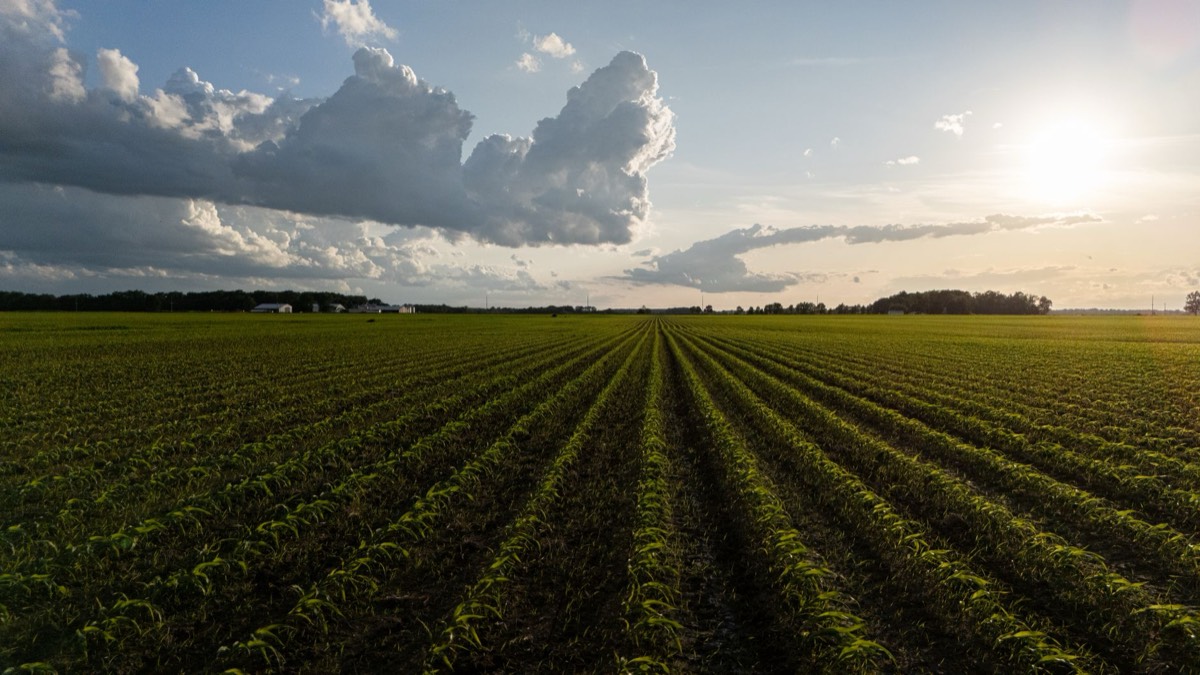
Photo: Sam McCool / Pexels
This article is general industry information from Neoterra Agro. Figures and market claims are drawn from public sources where cited; where a source is not given, treat the point as indicative. For product specifications and current availability, contact our team.
 NEOTERRA