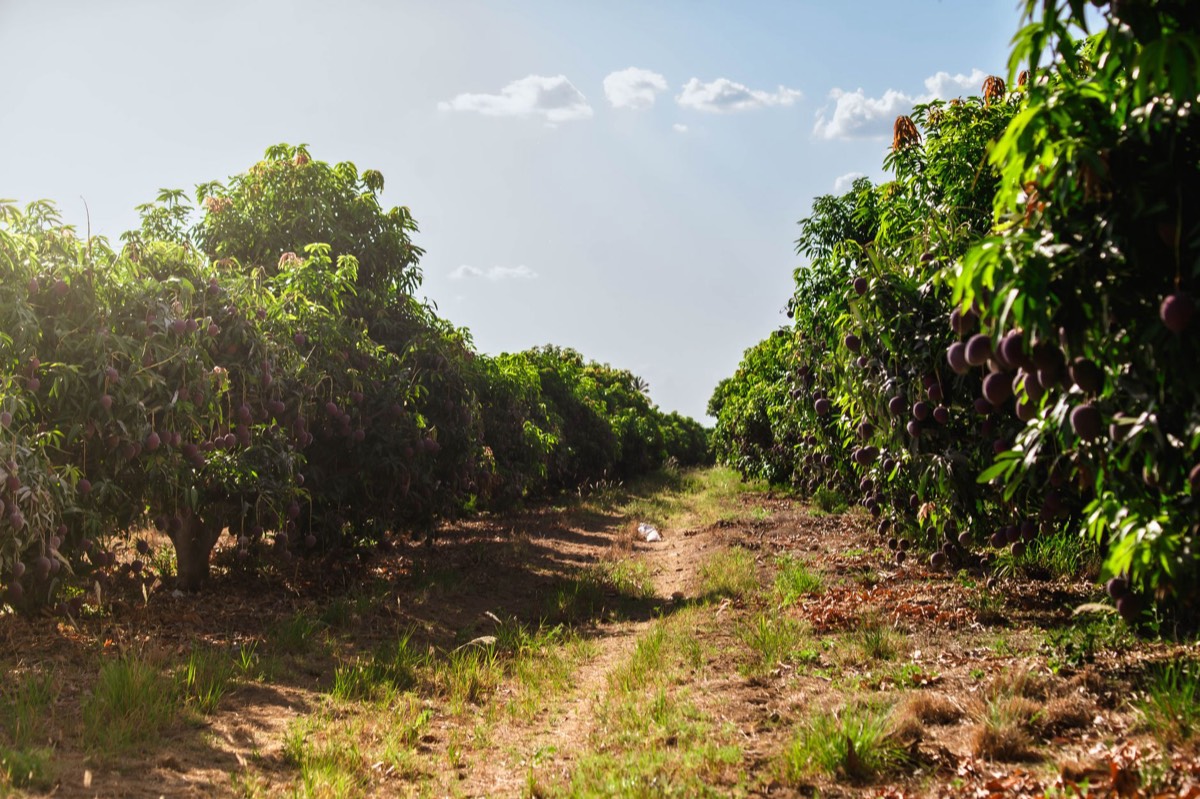
In 2014 Kenya stopped sending mangoes to the European Union. No regulator in Brussels ordered it. The industry closed the door on itself, to avoid being blacklisted outright after repeated interceptions of fruit flies in our consignments. That self-imposed ban held for eight seasons, and it was only lifted in September 2021 (The Star).
What changed in those eight years was not the fruit. Kenyan mango was always good. What changed was the discipline around a single insect.
It is worth being precise, because farms that have learned to manage pesticide residues often assume the same logic applies. It does not.
A residue is a quantity. There is a limit, you spray within it, you observe the interval, and a laboratory measures how close you came. A quarantine pest is a presence. The mango fruit fly and the mango weevil are classified as quarantine pests in the EU, and there is no tolerance level to work down to. One live larva in one fruit in one carton can condemn the consignment.
You cannot manage a quarantine pest at the packhouse door. By the time the fruit reaches the grading line, the decision has already been made in the orchard.
The female fly lays her eggs under the skin of maturing fruit. The larvae develop inside the flesh. At harvest the fruit is firm, well-coloured and looks entirely sound. It grades. It packs. It arrives in Europe as a soft, collapsed mess, or worse, arrives intact and gets opened by an inspector.
No sorting table catches this reliably. The serious work happens months earlier, and across a whole growing area rather than one farm at a time — a well-managed orchard surrounded by neglected ones is reinfested every season.
The package developed by the International Centre of Insect Physiology and Ecology (icipe) is the reference standard in East Africa, and it is deliberately not a spray programme (icipe):
The economics hold up: research across production scales found the practices profitable, with a break-even of roughly nine to seventeen trees (Journal of Integrated Pest Management). This is not a technology that only pays on a large estate.
Run properly at area scale, the results are substantial: fruit fly presence in Makueni's designated control zones was reported to have fallen sharply through 2022 (FreshPlaza).
The spot-bait approach also helps your residue file: less product on the fruit is less to detect.
Field suppression gets the population down. It does not certify a consignment. For that, Kenya now has two approved post-harvest disinfestation routes: hot water treatment, approved in 2021, and vapour heat treatment, approved in June 2023, both administered under the Kenya mango certification protocol overseen by KEPHIS (The Standard).
Both work the same way: bring the flesh to a temperature that kills eggs and larvae inside it, and hold it there.
Three things worth understanding about heat treatment:
The schedule is not yours to adjust. Core temperature and holding time are fixed by the certification protocol. A tank that runs cool for two minutes has not treated anything, and a tank that runs hot has cooked your margin.
There is a bonus, and it is real. Hot water work on mango has repeatedly shown anthracnose suppression alongside disinfestation — trials on Keitt found treatment at 52°C effective against anthracnose through three weeks of storage without damaging firmness or soluble solids (ResearchGate). Quarantine schedules and disease schedules are not identical, but the direction is favourable.
It is a treatment, not a rescue. Heavily infested fruit does not come out of the tank as export fruit; it comes out as cooked infested fruit. Over-mature fruit does not survive the process well either. Heat treatment rewards orchards that were already clean and fruit that was picked firm.
There is a harder problem behind the phytosanitary one. Kenya's export orchards lean heavily on the Apple mango, while EU retail demand centres on Kent and Alphonso types that are barely planted here — mango exports earned about Sh1.7 billion in 2021, against Sh14.6 billion for avocado (Business Daily).
Variety is a decision you live with for the working life of a tree, and it deserves more thought than it usually gets. It is one reason we run open-field variety work on our own ground rather than trusting catalogue claims — the principle behind our [live trials](/live-trials) programme.
KALRO estimates that as much as 45 percent of Kenya's mango crop is lost to poor handling and limited market access, with losses in Makueni alone exceeding 30 percent (Frontiers in Sustainable Food Systems). On a national crop reported at over 700,000 tonnes a year, that is an enormous amount of work thrown away.
Fly control and heat treatment get discussed as export requirements. They are better understood as loss recovery that happens to open a market. Fruit you stop losing to larvae is fruit you can sell somewhere.
If mango is in your plan for the coming season, work backwards from the fly:
We source mango and other tropical fruit from Kenyan growers for export, and the conversations that go well start at flowering rather than at the packhouse. If you are planning volume for the next window, talk to us early — see our [produce](/produce) range, or [order](/order) directly.
The past leads. The future grows.
Photo: pedro furtado / Pexels
This article is general industry information from Neoterra Agro. Figures and market claims are drawn from public sources where cited; where a source is not given, treat the point as indicative. For product specifications and current availability, contact our team.
 NEOTERRA